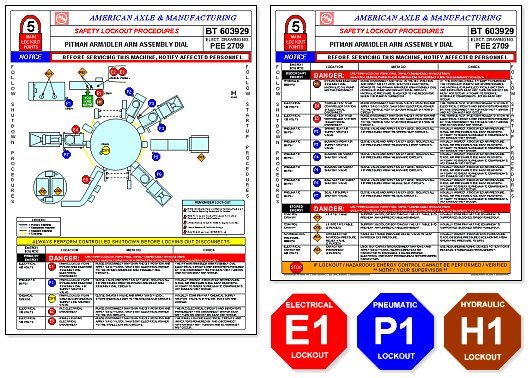
Every year, hundreds of workers suffer serious injuries during equipment servicing—all because hazardous energy wasn’t properly controlled. The solution? A clear, enforceable lockout tagout (LOTO) procedure. But many small to mid-sized facilities lack the resources to build one from scratch. That’s where a free lockout tagout procedures template becomes invaluable.
This isn’t just about checking a compliance box. It’s about creating a repeatable, reliable system that protects your team every time machinery needs maintenance. A well-structured LOTO template simplifies OSHA compliance, reduces human error, and ensures consistency across shifts and departments.
Here’s how to get started—and where to find a practical, customizable LOTO template at no cost.
Why a LOTO Template Saves Time and Lives
Creating lockout tagout documentation from the ground up is complex. It requires mapping energy sources, defining roles, establishing verification steps, and aligning with OSHA 29 CFR 1910.147. Without a starting point, teams waste time reinventing the wheel—or worse, skip critical steps.
A free LOTO procedures template eliminates guesswork. It provides:
- A standardized format for documenting control procedures
- Built-in compliance with regulatory requirements
- Clear roles for authorized and affected employees
- Visual cues and checklists to reduce oversights
For example, a manufacturing plant in Ohio reduced its maintenance-related incidents by 70% within six months of adopting a structured LOTO template. The key wasn’t new equipment—it was consistent, documented procedures accessible to every technician.
Templates also scale. One procedure can be adapted across similar machines, reducing redundancy and training overhead.
Core Components of an Effective LOTO Template
A quality lockout tagout template isn’t just a blank form—it’s a functional tool. When evaluating or customizing a free template, ensure it includes these essential sections:
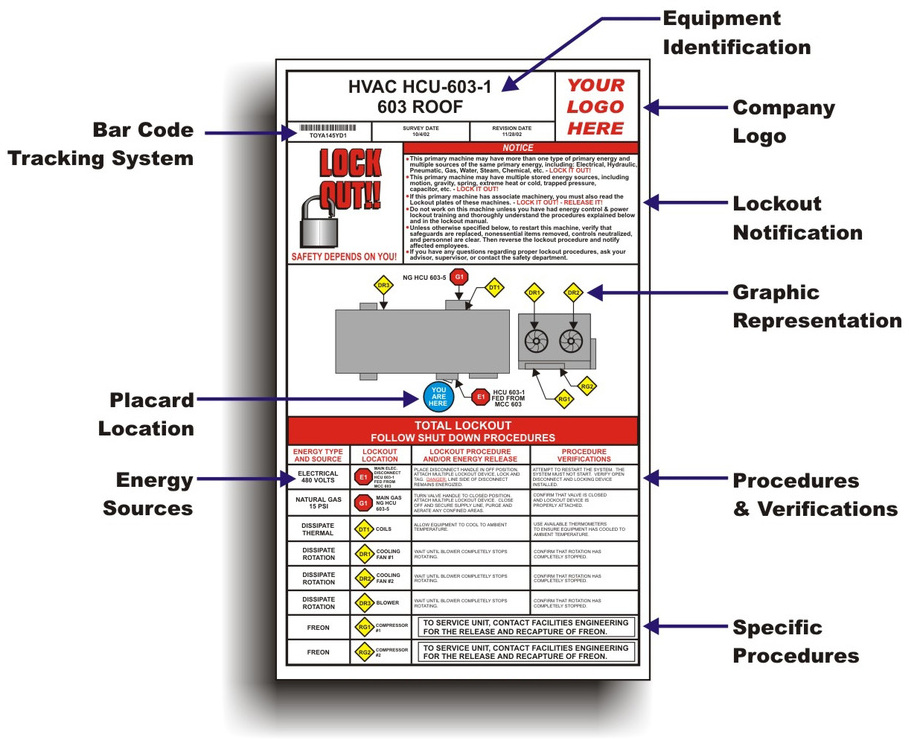
1. Equipment Identification Clearly name the machine or system. Include model, serial number, and location. Example: “Hydraulic Press #3, Production Line B, South Facility.”
2. Energy Sources List all energy types: electrical, pneumatic, hydraulic, thermal, chemical, and gravitational. Specify isolation points (e.g., circuit breaker #12, valve #4B).
3. Authorized Personnel Designate who can perform lockout. Include names, roles, and training status. Never assume universal authorization.
4. Step-by-Step Procedure Break down the process:
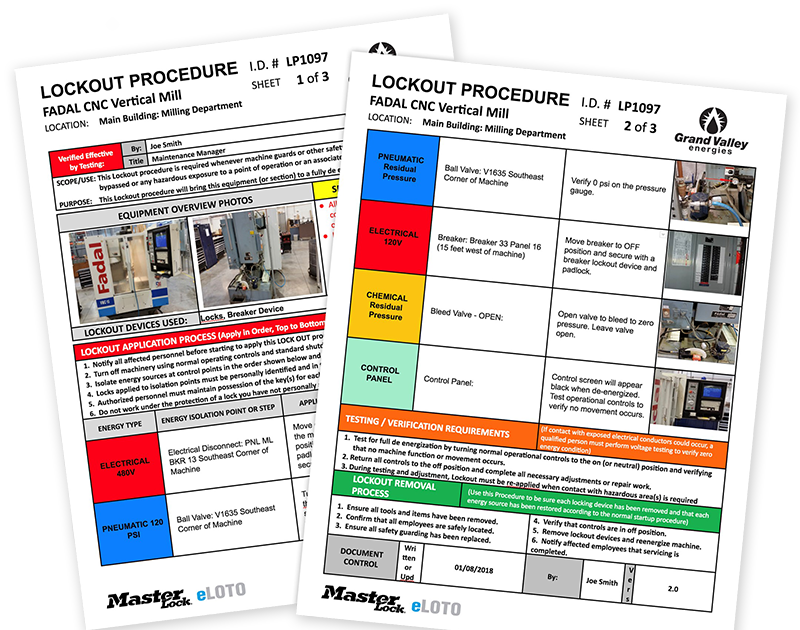
- Notify affected employees
- Shut down equipment using normal controls
- Isolate all energy sources
- Apply lockout devices with individual locks
- Release stored energy (e.g., bleed lines, block moving parts)
- Verify isolation (test by attempting startup)
5. Tagout Requirements Tags must include:
- Name of authorized employee
- Date and time of lockout
- Reason for isolation
6. Restoration Steps Detail how to safely return equipment to service:
- Ensure all tools are removed
- Confirm personnel are clear
- Remove locks only by the person who applied them
- Notify team before restart
Without these elements, your LOTO process is incomplete—and potentially non-compliant.
Where to Find a Free LOTO Procedures Template
Several reputable sources offer free, downloadable LOTO templates. These are not generic PDFs—they’re professionally designed, OSHA-aligned documents that can be customized in minutes.
Here are five trusted options:
| Provider | Format | Key Features | Access Method |
|---|---|---|---|
| OSHA.gov | PDF/Word | Official compliance guidance, sample procedures | Free download |
| Creative Safety Supply | Word/Excel | Editable fields, visual layout, multilingual support | Free with email signup |
| SafetyCulture (iAuditor) | Digital template | Cloud-based, mobile app integration, audit-ready | Free account required |
| Graphic Products | Word/PDF | Includes GHS-style labels and flowcharts | Free download |
| SafetyTek | Word | Step-by-step prompts, role definitions | Free with registration |
All these templates are fully customizable. Add your company logo, tailor the language to your operations, and integrate facility-specific lockout points.
Pro Tip: Avoid templates that don’t allow for equipment-specific variations. A “one-size-fits-all” approach fails when dealing with complex machinery.
Common Mistakes When Using Free LOTO Templates
A template is only as strong as its implementation. Common pitfalls include:
Assuming the Template Is Complete
Many users download a template, fill in names, and call it done. But every machine has unique energy sources. For example, a conveyor system may have electrical drives and gravity-fed rollers—both need isolation, but only one might be obvious.
Fix: Conduct an energy survey for each asset before finalizing the procedure.
Skipping Employee Involvement Affected employees often know hidden risks. A maintenance tech might note that residual pressure builds slowly in a hydraulic line—an issue not obvious from schematics.
Fix: Review procedures with frontline workers before approval.
Using Tags Without Locks Tagout alone is not sufficient unless full protection can be verified. Tags can be ignored; locks physically prevent startup.
Fix: Use lockout devices as the primary control. Tags are secondary warnings.
Inconsistent Lock Management Shared locks or master keys defeat the purpose. OSHA requires that only the authorized employee can remove their lock.
Fix: Use individual padlocks with unique keys or combination codes.
Avoid these mistakes by treating the template as a starting point—not the final product.
How to Customize Your LOTO Template for Maximum Impact
Start with a base template, then refine it for your environment. Here’s a real-world workflow:
Step 1: Select a Template Download the OSHA or SafetyCulture version for a compliant foundation.
Step 2: Map High-Risk Equipment Prioritize machines with multiple energy sources or frequent servicing. Example: Industrial ovens with gas, electrical, and thermal components.
Step 3: Conduct a Walkthrough With maintenance and safety leads, go to the machine. Identify: - Shut-off points - Stored energy risks - Lock application locations
Step 4: Draft the Procedure Use the template to document steps. Include photos or diagrams if possible. Example: “Place lock on disconnect switch J5, located behind control panel.”
Step 5: Train and Test Run a simulated lockout. Can a technician safely isolate the machine using only the document? If not, revise.
Step 6: Review Annually Update procedures when equipment changes or incidents occur.
One food processing facility reduced procedure completion time by 40% after adding QR codes to machines—scanning pulls up the digital LOTO form instantly.
Integrating LOTO Templates into Your Safety Management System
A standalone template isn’t enough. For lasting impact, embed it into your broader safety program:
- Training: Use the template during onboarding and annual refreshers.
- Audits: Include LOTO compliance in safety inspections.
- Incident Reviews: Investigate near-misses to improve procedures.
- Digital Access: Upload templates to a central drive or safety app for on-the-floor access.
Companies using digital LOTO systems report 50% faster lockout execution and better audit readiness.
Even with a free template, consistency is what drives safety outcomes.
Final Recommendation: Start Now, Improve Continuously
You don’t need a six-figure safety platform to protect your team. A free lockout tagout procedures template gives you the foundation—fast. Choose one from a trusted source, customize it for your equipment, involve your people, and enforce it rigorously.
Compliance isn’t about perfection on day one. It’s about progress. Every completed, documented lockout is a win.
Download a template today. Review it with your maintenance team tomorrow. And by the end of the week, have your first machine fully protected.
Safety isn’t expensive. It’s priceless.
Frequently Asked Questions
Where can I get a free lockout tagout procedures template? Reputable sources include OSHA.gov, Creative Safety Supply, SafetyCulture, and Graphic Products—all offer free, customizable templates.
Is a free LOTO template OSHA-compliant? The template itself isn’t certified, but those from OSHA-aligned providers meet regulatory requirements when properly implemented.
Can I use the same template for all machines? No. While the format can be standardized, each machine requires a unique procedure based on its energy sources and shutdown steps.
Do I need both lockout and tagout? Yes. Locks physically prevent startup; tags communicate why and who locked it out. Tagout alone is only acceptable in limited cases.
Who should apply locks during maintenance? Only authorized employees trained in LOTO procedures should apply or remove locks.
What if a worker forgets their lock? The lock may only be removed by a supervisor following a documented, verified process—never forced or cut without confirmation the machine is safe.
Can digital templates replace paper ones? Yes. Digital LOTO procedures (on tablets or apps) are fully compliant if they’re accessible, secure, and include all required elements.
FAQ
What should you look for in Free Lockout Tagout Procedures Template for Safety Teams? Focus on relevance, practical value, and how well the solution matches real user intent.
Is Free Lockout Tagout Procedures Template for Safety Teams suitable for beginners? That depends on the workflow, but a clear step-by-step approach usually makes it easier to start.
How do you compare options around Free Lockout Tagout Procedures Template for Safety Teams? Compare features, trust signals, limitations, pricing, and ease of implementation.
What mistakes should you avoid? Avoid generic choices, weak validation, and decisions based only on marketing claims.
What is the next best step? Shortlist the most relevant options, validate them quickly, and refine from real-world results.



:max_bytes(150000):strip_icc():focal(728x275:730x277)/princess-catherine-prince-william-donald-trump-king-charles-iii-trump-state-visit-uk-windsor-091725-8672599a27214b6f8ffdbb07fd7596e4.jpg)
